Que cherchez-vous?


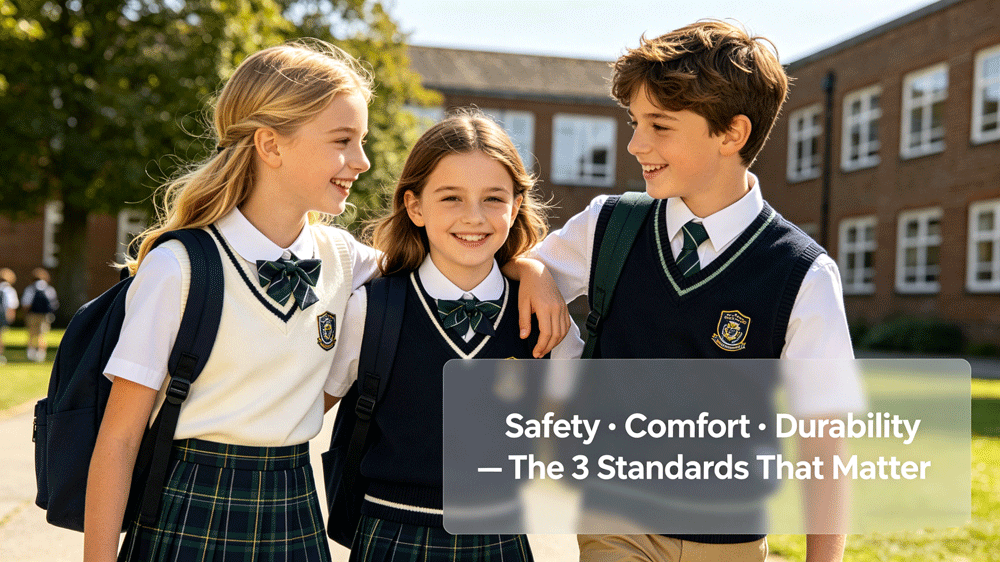
Making sure that school uniforms are safe, comfortable, and durable all at once is the most critical step in the entire procurement process. For schools, educational institutions, and distributors, mastering the following three core material selection standards—along with a clear checklist—can effectively help you avoid low‑quality products, genuinely protect students' health, and improve both the wearing experience and the lifespan of the garments.

Standard 1: Safety Category – Whether the garment is worn next to the skin or as outerwear determines the required fabric grade
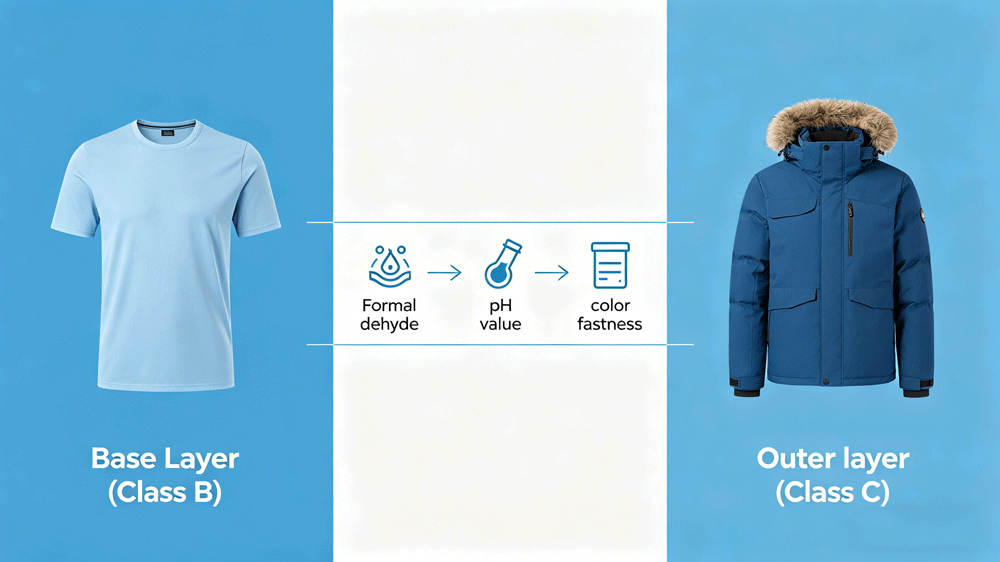
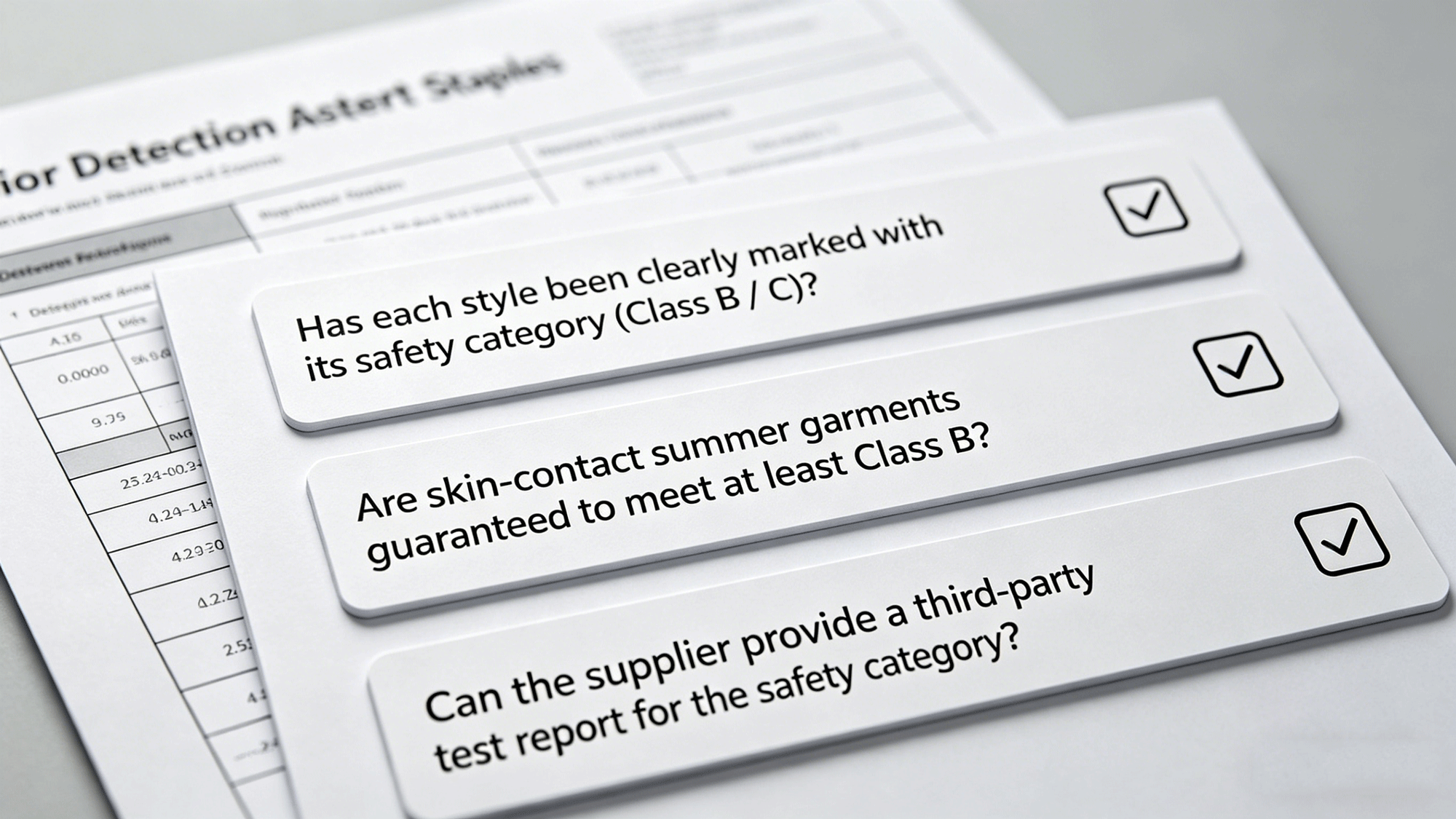
Under China's mandatory standard system, school uniform fabrics are classified into different safety grades. Summer uniforms worn directly against the skin (e.g. T‑shirts and polo shirts) must use fabrics that meet Class B or higher; winter outerwear can use Class C. This classification directly impacts core safety indicators such as formaldehyde content, pH value and colorfastness. If a supplier cannot clearly state the safety category of each garment, they fail at this very first checkpoint.
Checking List
Standard 2: Fabric Composition – The foundation of comfort and durability lies in the fiber blend
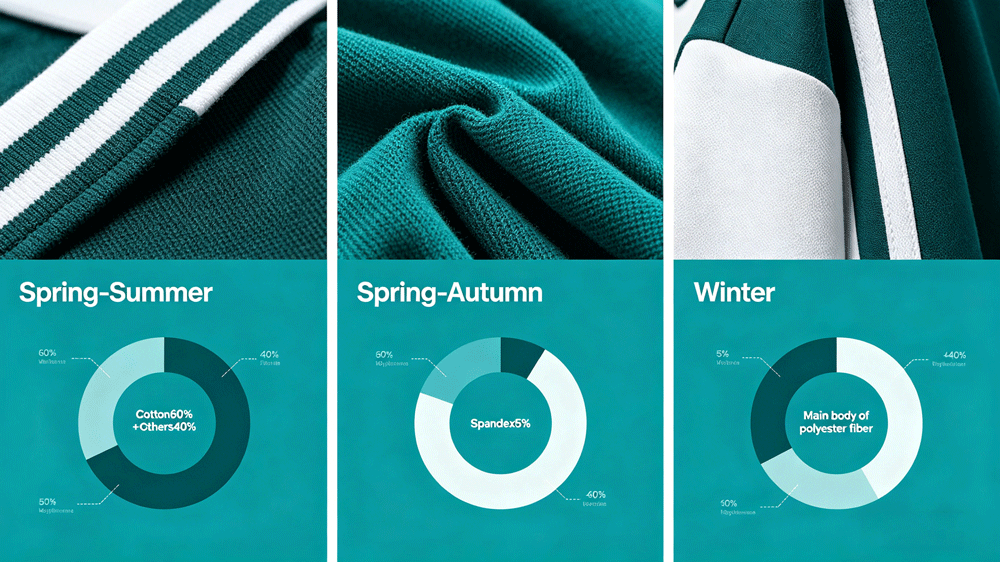
School uniforms are not "one‑season garments"; they must endure frequent washing and intense daily activity. A sensible fiber blend can offer softness, stretch, and wrinkle resistance all at once. Our rule‑of‑thumb: summer tops should have a cotton content of at least 60% (or ≥40% in some climate regions); spring/autumn sets should contain no less than 5% spandex to ensure freedom of movement; winter uniforms can rely mainly on polyester, which provides crispness, quick‑drying and wind‑resistant properties for better warmth and durability.
Checklist
| Is the cotton content of summer tops promised at ≥60% (or ≥40% based on regional needs)? |
| Do spring/autumn uniforms contain at least 5% spandex for stretch? |
| Is the winter outerwear predominantly made of durable, easy‑care polyester? |
Standard 3: Hazardous Substance Limits – The invisible indicators are what truly protect children
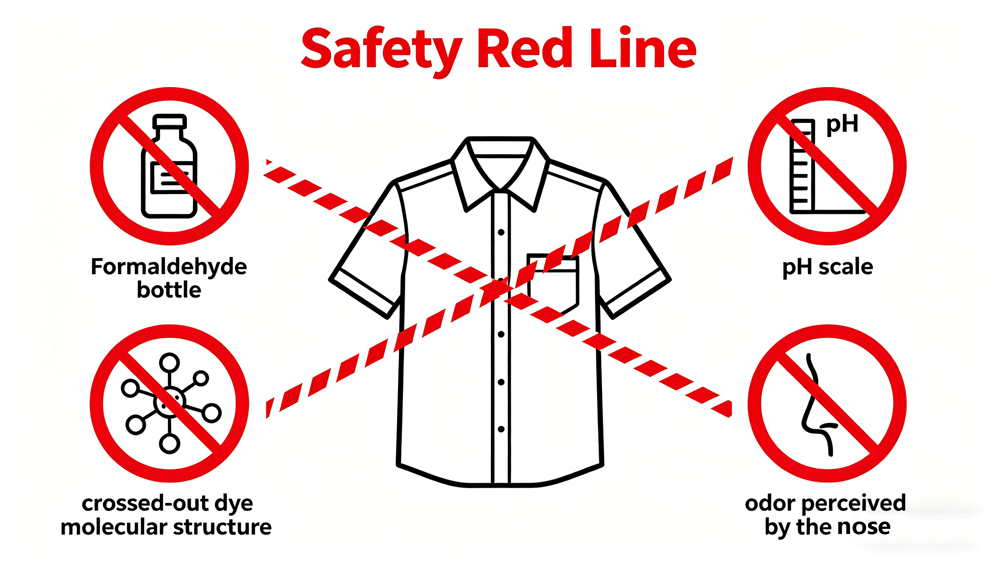
Excessive formaldehyde, overly acidic or alkaline pH values, carcinogenic azo dyes that can break down, and pungent odors such as moldy or gasoline‑like smells are absolute red lines. Compliant school uniforms must meet: formaldehyde ≤75 mg/kg, pH strictly between 4.0 and 8.5, zero detectable carcinogenic aromatic amines, and no irritating odors whatsoever. All of these must be reflected in test reports, not just in verbal promises.
Checklist
| Are formaldehyde and pH test reports required for every production batch? |
| Is there an explicit ban on the use of carcinogenic azo dyes that can decompose? |
| Is there a fabric odor acceptance standard (no unusual or pungent chemical smells)? |
Golden Shield n'est pas seulement un fournisseur, mais aussi un pilier fiable dans votre système de chaîne d'approvisionnement. Nous aidons les directeurs d'achats à améliorer la résilience de la chaîne d'approvisionnement et à assurer la stabilité des opérations en construisant une chaîne industrielle solide, des processus de gestion transparents et des modèles de coopération collaboratifs et innovants.
Bouclier d'or-Votre partenaire de chaîne d'approvisionnement fiable
WhatsApp:86 133 7788 3692
Courriel:[email protected]